Geriatric Care : How to Care for an Elderly Person With Dementia at Home
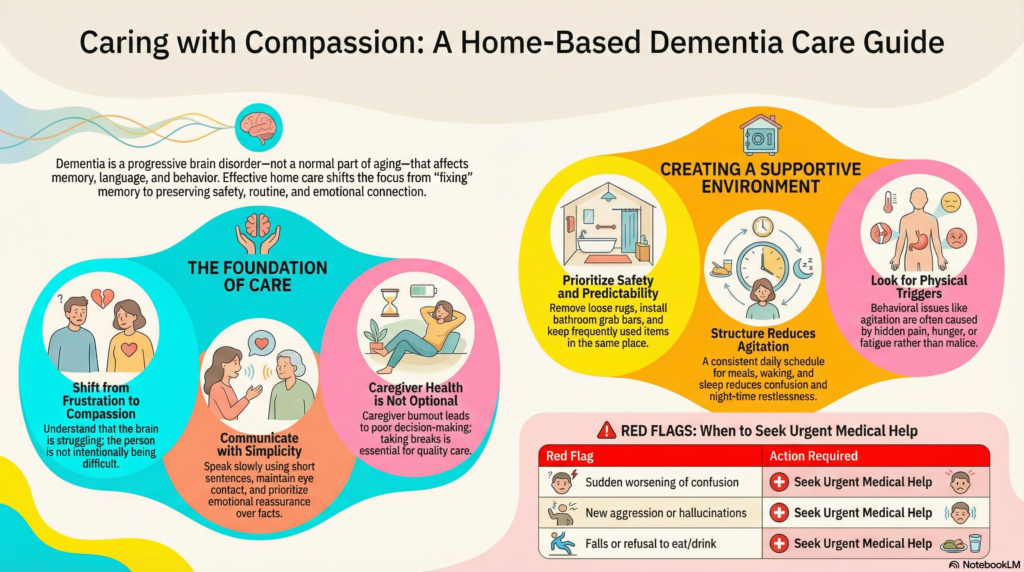 Caring for an elderly family member with dementia is not just a medical responsibility—it is an emotional, physical, and psychological journey. Many families want to provide care at home, but often feel unprepared for the day-to-day challenges.
Dementia care is not about “fixing memory.”
It is about preserving dignity, safety, and quality of life—for both the patient and the caregiver.
This guide focuses on practical, evidence-based home care principles that truly make a difference.
Understanding dementia: set the right expectations
Dementia is a progressive brain disorder, not a normal part of ageing.
It affects:
-
Memory
-
Orientation
-
Language
-
Judgement
-
Behaviour
-
Emotions
Importantly:
The person is not being difficult—the brain is struggling.
Once families understand this, caregiving shifts from frustration to compassion.
1. Create a safe and predictable home environment
Safety is the foundation of dementia care.
Key home safety steps:
-
Remove loose rugs and clutter (reduces fall risk)
-
Install grab bars in bathrooms
-
Ensure good lighting, especially at night
-
Lock access to unsafe areas (kitchen gas, terrace, stairs)
-
Keep frequently used items in the same place
Predictability reduces anxiety.
A familiar environment helps the brain compensate for memory loss.
2. Establish a structured daily routine
The dementia brain functions best with routine.
A consistent schedule for:
-
Waking up
-
Meals
-
Bathing
-
Medication
-
Daytime activity
-
Sleep
…reduces confusion, agitation, and night-time restlessness.
Avoid sudden changes unless absolutely necessary.
3. Communicate simply—and kindly
Communication problems are a core feature of dementia.
What helps:
-
Speak slowly
-
Use short, clear sentences
-
Ask one question at a time
-
Maintain eye contact
-
Use gestures and visual cues
What to avoid:
-
Arguing or correcting repeatedly
-
Saying “You already told me”
-
Testing memory unnecessarily
Correcting facts is less important than emotional reassurance.
4. Managing behavioural symptoms at home
Many families struggle more with behaviour than memory.
Common issues include:
-
Agitation
-
Repeated questioning
-
Suspiciousness
-
Wandering
-
Night-time confusion (sundowning)
First rule: look for triggers
Behaviour often worsens due to:
-
Pain
-
Hunger
-
Constipation
-
Urinary discomfort
-
Overstimulation
-
Fatigue
-
Unfamiliar surroundings
Treat the cause before reaching for medicines.
5. Use medicines carefully—and sparingly
Medicines can help, but they must be used judiciously.
-
Memory medications may slow decline in some patients
-
Behavioural medicines are not first-line
-
Sedatives and antipsychotics should be avoided unless absolutely necessary
Never adjust or stop medicines without medical advice.
In dementia care, more medicines rarely mean better care.
6. Nutrition and hydration matter more than you think
Poor intake worsens confusion.
Practical tips:
-
Small, frequent meals
-
Familiar foods
-
Soft textures if chewing is difficult
-
Finger foods if using cutlery is hard
-
Gentle reminders to drink water
Weight loss and dehydration can quietly worsen dementia symptoms.
7. Sleep care: protect the night
Sleep problems are extremely common in dementia.
Helpful strategies:
-
Exposure to daylight in the morning
-
Avoid long daytime naps
-
Reduce evening noise and screen exposure
-
Maintain a calm bedtime routine
-
Address pain, urinary frequency, or anxiety
Sedation is not the same as sleep and should not be the default solution.
8. Encourage safe physical and mental activity
Activity slows functional decline.
Simple options:
-
Walking
-
Light household tasks
-
Music
-
Prayer or spiritual routines
-
Simple games or puzzles (appropriate to ability)
-
Looking through old photographs
Purposeful engagement reduces agitation more effectively than medication.
9. Caregiver health is not optional
Caregivers often ignore their own wellbeing.
This is dangerous.
Caregiver burnout leads to:
-
Depression
-
Anger
-
Guilt
-
Poor decision-making
-
Health problems
Caregivers must:
-
Take breaks
-
Ask for help
-
Share responsibility
-
Seek professional guidance early
A supported caregiver provides better care.
10. Know when to seek medical help
Consult a doctor urgently if there is:
-
Sudden worsening of confusion
-
New aggression or hallucinations
-
Fever or infection
-
Falls
-
Refusal to eat or drink
-
Severe sleep disturbance
Sudden changes are not normal dementia progression—they often indicate treatable problems.
The philosophy of good dementia care
Dementia care is not about controlling behaviour.
It is about understanding vulnerability.
Small things matter:
-
Tone of voice
-
Familiar routines
-
Respectful handling
-
Emotional reassurance
When the brain cannot remember, it can still feel.
Final thoughts
Caring for an elderly person with dementia at home is challenging—but deeply meaningful.
With the right structure, knowledge, and support:
-
Families cope better
-
Patients feel safer
-
Crises reduce
-
Quality of life improves
Dementia changes the person—but it does not erase their humanity.
Dr. Srinivas Rajkumar T, MD (AIIMS), DNB, MBA (BITS Pilani)
Consultant Psychiatrist & Neurofeedback Specialist
Mind & Memory Clinic, Apollo Clinic Velachery (Opp. Phoenix Mall)
✉ srinivasaiims@gmail.com 📞 +91-8595155808