How to Protect Children from Excessive Screen Time
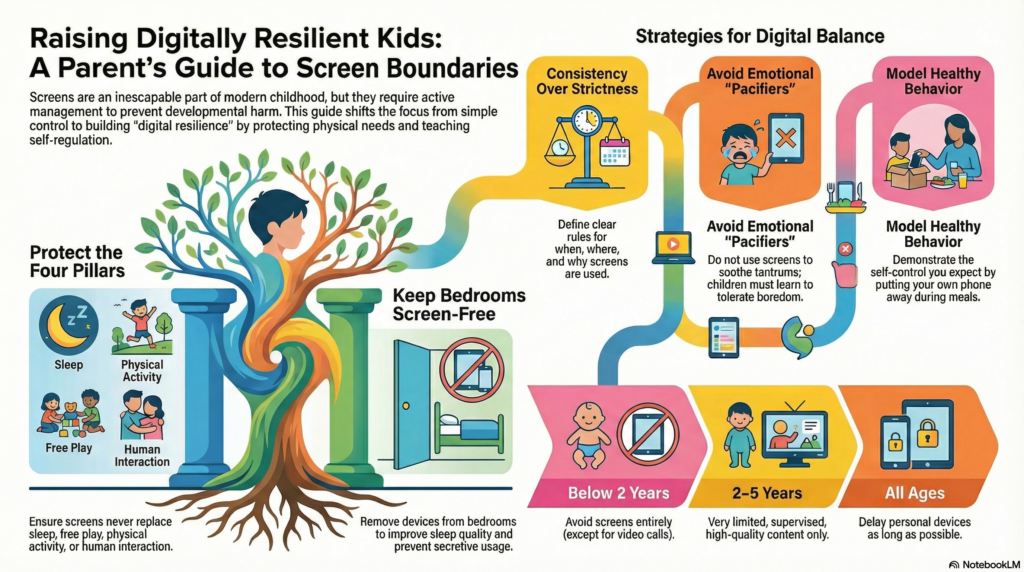 A practical, science-based guide for parents in a digital world
Screens are no longer occasional visitors in a child’s life. They live in our pockets, bedrooms, classrooms, and even dining tables. For children, especially, screens can be soothing, stimulating, educational—and quietly consuming.
Protecting children from excessive screen time does not mean banning technology or turning homes into digital monasteries. It means guiding exposure, preserving development, and teaching regulation before dysregulation sets in.
This article outlines practical, developmentally informed strategies to protect children from harmful screen overuse while allowing healthy, age-appropriate digital engagement.
1. Start with Development, Not Devices
The younger the child, the more the brain depends on real-world input—faces, voices, movement, play, and unpredictability.
Evidence-based principle:
Screens are most disruptive when they replace:
-
Sleep
-
Free play
-
Physical activity
-
Human interaction
Protection begins by ensuring these four pillars are non-negotiable.
2. Delay Early Exposure as Much as Possible
Early screen exposure is linked to:
-
Delayed language development
-
Reduced attention span
-
Poor emotional regulation
Practical guidance:
-
Below 2 years: Avoid screens as far as possible (except video calls)
-
2–5 years: Very limited, supervised, high-quality content
-
Personal devices should be delayed even if shared screens are used
Delay builds resilience. Early exposure builds dependency.
3. Create Clear, Predictable Screen Rules
Children cope better with structure than negotiation.
Instead of vague limits, define:
-
When screens are allowed
-
Where screens can be used
-
For how long
-
For what purpose
Example:
Screens after homework, not before bedtime.
Screens in the living room, not the bedroom.
Screens for learning and leisure, not emotional soothing.
Consistency protects more than strictness.
4. Keep Screens Out of Bedrooms
This single change has disproportionate benefits.
Bedroom screens are associated with:
-
Poor sleep quality
-
Delayed sleep onset
-
Increased emotional reactivity
-
Secretive, uncontrolled usage
Bedrooms should remain sleep and recovery zones, not entertainment hubs.
5. Protect Sleep Aggressively
Sleep loss is one of the earliest and most damaging consequences of screen overuse.
Non-negotiables:
-
No screens 1–2 hours before bedtime
-
No phones/tablets in bed
-
Use night routines that are screen-free and repetitive
A well-rested child tolerates limits better, regulates emotions better, and craves screens less.
6. Do Not Use Screens as Emotional Regulators
One of the most common pathways to screen addiction is this:
Distress → screen → relief
Over time, the child never learns:
-
Boredom tolerance
-
Frustration management
-
Self-soothing skills
Screens should never be the first response to:
-
Tantrums
-
Anxiety
-
Anger
-
Restlessness
Comfort the child, not the device.
7. Encourage Boredom (Yes, Really)
Boredom is not a problem to be solved.
It is a neurodevelopmental training ground.
Bored children:
-
Develop imagination
-
Learn self-initiation
-
Explore creativity
-
Build internal regulation
A child who cannot tolerate boredom will inevitably overuse screens.
8. Model the Behavior You Expect
Children don’t follow rules.
They follow patterns.
If parents:
-
Scroll during meals
-
Check phones during conversations
-
Use screens to unwind compulsively
Children absorb this silently.
The most effective screen rule is visible adult self-control.
9. Be Extra Cautious in Vulnerable Children
Children with:
-
ADHD
-
Autism spectrum disorder
-
Anxiety
-
Emotional dysregulation
-
Learning difficulties
are more susceptible to problematic screen use.
They may need:
-
Stricter limits
-
Slower exposure
-
More supervision
-
Alternative dopamine sources (sports, music, hands-on play)
Individualize rules, don’t standardize them blindly.
10. Shift the Goal: From Screen Time to Screen Literacy
The long-term aim is not control, but self-regulation.
Teach children:
-
Why limits exist
-
How algorithms work
-
How screens manipulate attention
-
How to recognize overuse in themselves
Protection evolves into digital wisdom.
Warning Signs That Screen Use Is Becoming Harmful
Parents should seek guidance if they notice:
-
Intense irritability when screens are removed
-
Sleep disturbances
-
Decline in academic performance
-
Loss of interest in offline activities
-
Social withdrawal
-
Secretive or compulsive use
Early intervention prevents long-term patterns.
Final Takeaway
Screens are powerful tools.
Children are still learning how to use power responsibly.
Protecting children from excessive screen time is not about fear or control—it is about preserving childhood, protecting the developing brain, and teaching balance before dependence forms.
Screens will stay.
Skills must grow.
Dr. Srinivas Rajkumar T, MD (AIIMS), DNB, MBA (BITS Pilani)
Consultant Psychiatrist & Neurofeedback Specialist
Mind & Memory Clinic, Apollo Clinic Velachery (Opp. Phoenix Mall)
✉ srinivasaiims@gmail.com 📞 +91-8595155808