Infertility Stress: The Silent Emotional Burden Couples Carry
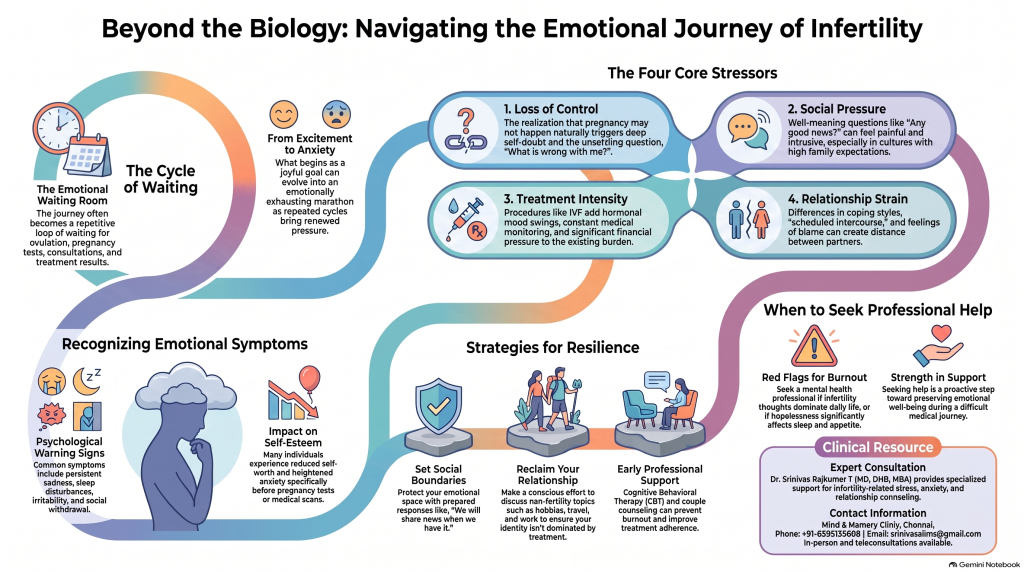 Infertility is often discussed as a medical condition. Hormones, ovulation cycles, sperm counts, IVF protocols. Yet behind every investigation report lies something rarely spoken about openly: the psychological weight of trying to conceive and failing month after month.
For many couples, infertility becomes one of the most emotionally exhausting experiences of their lives.
When Hope Turns Into Stress
Trying for a child usually begins with excitement. But when months turn into years, hope gradually gets replaced by anxiety.
Couples often find themselves trapped in a cycle:
-
waiting for ovulation
-
waiting for pregnancy tests
-
waiting for the next consultation
-
waiting for treatment results
Each cycle brings anticipation, disappointment, and renewed pressure.
Over time, what started as a joyful goal can begin to feel like an emotional marathon.
Why Infertility Causes So Much Psychological Stress
Infertility affects more than biology. It touches identity, relationships, and social expectations.
1. Loss of Control
Many people assume that pregnancy will happen naturally when they decide to start a family. When it doesn’t, the experience can feel deeply unsettling.
People may ask themselves:
-
“What is wrong with me?”
-
“Why is everyone else having children so easily?”
This loss of control can trigger anxiety and self-doubt.
2. Social Pressure
In many cultures, including in India, having children is strongly linked with family expectations.
Couples frequently face questions such as:
-
“Any good news?”
-
“When are you planning for a baby?”
These questions may seem harmless, but for couples struggling with infertility they can feel painful and intrusive.
3. Emotional Rollercoaster During Treatments
Fertility treatments such as IUI or IVF can intensify emotional stress.
Patients may experience:
-
constant monitoring and medical appointments
-
hormonal changes affecting mood
-
financial pressure from treatment costs
-
repeated disappointment when cycles fail
Studies show that infertility-related stress can be comparable to the stress experienced during serious medical illnesses.
4. Relationship Strain
Infertility can silently affect relationships.
Couples may experience:
-
blame (towards oneself or partner)
-
reduced intimacy due to “scheduled intercourse”
-
emotional withdrawal
-
communication difficulties
Partners often cope differently. One may want to talk about it constantly, while the other prefers silence.
Without support, these differences can create distance.
Psychological Symptoms Common in Infertility
Many individuals going through infertility develop emotional symptoms such as:
-
persistent sadness
-
anxiety before pregnancy tests or scans
-
sleep disturbance
-
irritability
-
reduced self-esteem
-
social withdrawal
In some cases, infertility may lead to clinical depression or anxiety disorders, which require professional support.
Why Mental Health Support Matters During Infertility
Psychological care during fertility treatment is not a luxury. It is an important part of comprehensive care.
Mental health support can help couples:
-
manage uncertainty and emotional swings
-
improve communication between partners
-
cope with treatment failures
-
maintain intimacy and connection
-
reduce anxiety during fertility procedures
Research suggests that lower stress levels may also improve treatment adherence and overall well-being during fertility treatment.
Practical Coping Strategies for Couples
1. Acknowledge Your Emotions
Feeling sad, frustrated, or even angry during infertility treatment is normal. Suppressing emotions often makes stress worse.
Talking about these feelings with your partner or a professional can be relieving.
2. Set Boundaries With Social Pressure
You are not obligated to answer every question about family planning.
Simple responses like
“We are working on it” or “We will share when there is news” can help protect emotional space.
3. Maintain Non-Fertility Conversations
Couples can unintentionally allow infertility to dominate their relationship.
Make conscious effort to talk about other aspects of life: work, travel, hobbies, future plans.
Your relationship is larger than fertility treatment.
4. Seek Professional Support Early
Psychological support during infertility can include:
-
stress management
-
cognitive behavioral therapy (CBT)
-
couple counseling
-
support during IVF cycles
-
treatment of anxiety or depression when needed
Early support can prevent emotional burnout.
When Should You Seek Professional Help?
Consider consulting a mental health professional if:
-
infertility thoughts dominate your daily life
-
you feel persistently hopeless or depressed
-
sleep and appetite are significantly affected
-
your relationship is becoming strained
-
anxiety before fertility procedures feels overwhelming
Seeking help is not a sign of weakness. It is a step toward preserving emotional well-being during a difficult journey.
Final Thoughts
Infertility is not just a medical challenge. It is also an emotional one.
Couples navigating infertility deserve compassion, understanding, and psychological support alongside medical treatment.
Addressing the emotional aspects of infertility can help couples maintain resilience, protect their relationship, and move forward with greater clarity and strength.
Consultation for Infertility-Related Stress
If you or your partner are experiencing emotional distress related to infertility or fertility treatment, professional support can help you navigate this challenging phase.
Consultation is available for:
-
infertility-related stress and anxiety
-
emotional support during IVF / fertility treatment
-
depression or anxiety associated with infertility
-
couple counseling and relationship support
Dr. Srinivas Rajkumar T, MD (AIIMS), DNB, MBA (BITS Pilani)
Consultant Psychiatrist & Neurofeedback Specialist
Mind & Memory Clinic – Apollo Clinic Velachery
Opp. Phoenix Marketcity Mall
Velachery Road, Chennai
✉ srinivasaiims@gmail.com
📞 +91-8595155808
Appointments available for in-person consultation and teleconsultation.