The Nocebo Effect: Can Talking About Side Effects Make Them More Likely?
 When we prescribe a medication, we have an ethical responsibility to discuss its potential benefits and possible side effects. But here’s an intriguing finding from medical research: the way we discuss side effects can influence whether patients experience them.
This phenomenon is known as the nocebo effect.
What is the Nocebo Effect?
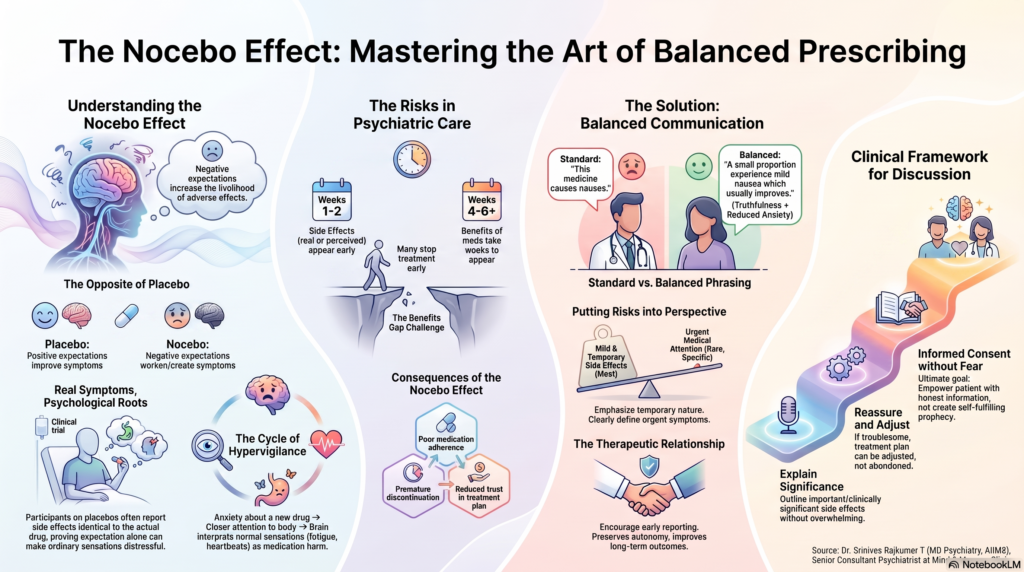
Most people are familiar with the placebo effect—when positive expectations improve symptoms even without an active treatment. The nocebo effect is the opposite. Negative expectations can increase the likelihood of experiencing or reporting adverse effects, even when those effects are not directly caused by the medication itself.
In psychiatric research, this has been demonstrated repeatedly. Participants receiving placebo tablets in antidepressant, antipsychotic, and anxiety medication trials often report side effects remarkably similar to those seen with the actual drug. Simply expecting a side effect can make ordinary bodily sensations seem more noticeable, distressing, and medication-related.
Why Does This Happen?
Our brains continuously interpret sensations from the body. When someone is anxious about a new medication, they naturally pay closer attention to every headache, stomach sensation, heartbeat, or moment of fatigue.
Several psychological and neurobiological mechanisms contribute:
- Increased attention to bodily sensations (hypervigilance)
- Anxiety and anticipatory stress
- Previous negative experiences with medications
- Suggestions from healthcare professionals, family, or the internet
- Brain circuits involved in expectation, including the prefrontal cortex, anterior cingulate cortex, insula, and amygdala
The symptoms are real, even if they are amplified by expectation rather than directly caused by the drug.
Why It Matters in Psychiatry
Psychiatric medications often require several weeks before their benefits become apparent. Unfortunately, side effects—whether pharmacological or expectation-driven—can appear much earlier.
This can lead to:
- Poor medication adherence
- Premature discontinuation
- Fear of trying effective treatments
- Reduced trust in treatment
- Lower overall recovery rates
Many patients stop treatment within the first few weeks because they become convinced the medication is harming them, when in reality some symptoms may reflect anxiety, heightened monitoring, or transient adjustment effects.
The Art of Discussing Side Effects
The solution is not to avoid discussing side effects. Patients deserve complete and honest information.
Instead, clinicians should strive for balanced communication.
A balanced discussion should:
- Clearly explain the important and clinically significant side effects.
- Put risks into perspective by discussing how common or uncommon they are.
- Emphasize that many side effects, if they occur, are mild and temporary.
- Explain what symptoms require urgent medical attention.
- Encourage patients to report concerns early rather than stopping medication on their own.
- Reassure patients that treatment can often be adjusted if troublesome side effects develop.
For example, instead of saying:
“This medicine frequently causes nausea and dizziness.”
A more balanced approach is:
“Most people tolerate this medication well. A small proportion experience mild nausea or dizziness during the first few days, but these symptoms usually improve. If they become troublesome or persist, let us know so we can help.”
Both statements are truthful. The second provides the same information while reducing unnecessary anxiety and promoting adherence.
Building Trust Through Communication
Patients should never feel that side effects are being dismissed or hidden. Equally, they should not leave the consultation expecting to experience every listed adverse effect.
The goal is informed consent without creating unnecessary fear.
Good psychiatric care combines scientific evidence with thoughtful communication. By explaining medications honestly, answering questions, and maintaining close follow-up, clinicians can minimise the nocebo effect while respecting patient autonomy.
Ultimately, the therapeutic relationship itself becomes one of the most powerful tools for improving treatment outcomes.
About the Author
Dr. Srinivas Rajkumar T
MD Psychiatry (AIIMS, New Delhi)
Senior Consultant Psychiatrist
Mind & Memory Clinic, Apollo Clinic, Velachery, Chennai
Opposite Phoenix Marketcity
Dr. Srinivas has a special interest in personalised psychiatry, comprehensive ADHD evaluation, neuropsychiatry, cognitive assessment, and evidence-based psychopharmacology. His practice integrates detailed clinical evaluation with objective cognitive testing and advanced neuropsychiatric assessment to develop individualised treatment plans that improve real-world functioning and quality of life.
Appointments: +91-8595155808
Email: srinivasaiims@gmail.com